
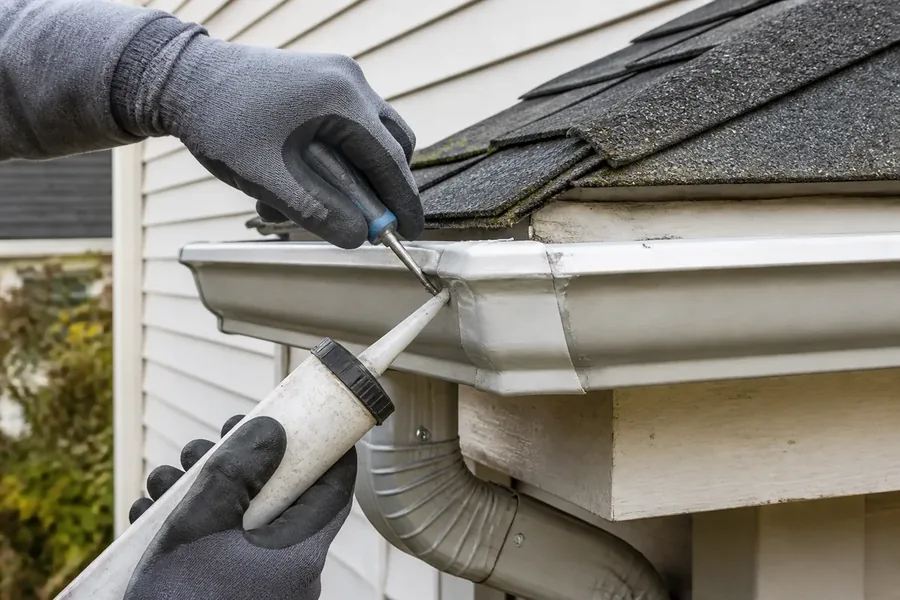
A damaged gutter does not always require a complete new system. A loose hanger, leaking corner, short section with poor pitch, or damaged downspout can often be corrected without replacing every run. Other homes have widespread wear or recurring drainage problems that make repeated spot repairs a poor long-term choice.
When comparing gutter repair vs. replacement in Berks County, the best decision comes from the cause, the extent of the damage, and the condition of the roof edge behind the gutter. The goal is to restore reliable water control without replacing sound material or preserving a system that can no longer do its job.
Start with the cause, not only the visible symptom
Overflow, stains, drips, and sagging can have several causes. A gutter may overflow because it is packed with debris, because a downspout is blocked, because the pitch is wrong, or because the system cannot accept concentrated water from a roof valley. A leak at one corner is different from splits and failed joints across several runs.
Before choosing repair or replacement, identify what is actually failing. If debris is the main problem, professional gutter cleaning may restore normal flow. If the gutter is pulling away, leaking, or holding water after it is clear, a gutter repair evaluation can determine whether the defect is local or system-wide.
When a targeted gutter repair may be enough
Repair is usually the practical starting point when the surrounding gutter and fascia remain sound and the problem is limited to a specific area. Examples include:
- a loose or missing hanger along one short section;
- an isolated leak at an end cap, corner, or joint;
- a short run that needs its pitch corrected;
- one damaged elbow or visible downspout section;
- a small separation where two components connect;
- minor storm damage that has not distorted the rest of the system.
A repair should address the reason the failure occurred. Sealing a joint without correcting movement, poor support, or standing water may only delay the same leak. Likewise, adding fasteners to deteriorated fascia does not create a dependable attachment point.
Homeowners can document symptoms from the ground during or after rain. Note where water escapes, whether the gutter looks level or bowed, and whether the downspout is discharging. The guide to what sagging gutters can mean explains several clues that help separate a localized support problem from broader roof-edge trouble.
When full or partial replacement makes more sense
Replacement becomes more reasonable when the system has multiple failures or its basic layout no longer fits the home. Common signs include:
- repeated leaks at several corners, joints, or seams;
- widespread corrosion, cracking, deformation, or impact damage;
- long runs pulling away from the fascia in more than one area;
- persistent standing water caused by a layout that cannot be corrected locally;
- recurring overflow after the gutters and downspouts have been cleared;
- many old repairs that continue to fail in different places;
- a roof or fascia project that requires most of the existing system to be removed.
Replacement does not always mean every component around the house must change. A professional scope may identify one elevation or one run that needs replacement while other sections remain serviceable. The important point is to avoid combining new material with unstable attachment points or an unresolved drainage path.
If capacity is part of the problem, the choice between sizes should be based on roof area, roof shape, downspout placement, and concentrated flow. Our comparison of 5-inch and 6-inch gutters for Pennsylvania homes explains why a larger gutter is useful in some situations but is not a substitute for correct pitch and drainage.
Five factors that should guide the decision
1. How much of the system is affected?
One failed joint is a repair question. Leaks, movement, and deformation on several sides of the home point toward a broader scope. Count the distinct problem areas rather than judging the system by the most visible drip.
2. Is the fascia strong enough to hold the gutter?
Soft, split, or deteriorated wood must be addressed before hangers can stay secure. If the roof edge needs work, coordinate soffit and fascia service with the gutter scope so new or repaired sections attach to sound material.
3. Does water move to the downspouts?
A sound gutter still needs consistent pitch and open outlets. Standing water adds weight and stresses seams and hangers. Downspout placement and discharge also matter; replacing the gutter alone will not fix a blocked pipe or a poor discharge route.
4. Are repairs becoming repetitive?
A first localized repair can be sensible. Calls for different leaks and loose sections every season suggest that the remaining system is nearing the end of its useful service. Compare the total scope and disruption of repeated work with a planned replacement, not only the price of one small repair.
5. Will the planned work solve the whole drainage problem?
The estimate should state what will be repaired or replaced, how pitch and support will be checked, what happens at corners and downspout outlets, and whether fascia or drainage work is separate. A clear scope makes two estimates easier to compare.
What an on-site assessment should check
A useful assessment follows the water path from the roof edge to the discharge point. It should review visible gutter condition, hangers, joints, slope, roof valleys, fascia, downspout connections, and the areas where water reaches the ground. This prevents a cosmetic repair from being mistaken for a drainage solution.
For replacement, the scope should also cover gutter size, number and location of downspouts, material and color, removal of the old system, and any roof-edge preparation. The Pennsylvania gutter installation service page outlines the installation side of that decision.
Repair or replacement: a practical rule
Choose repair when the defect is limited, the surrounding material is sound, and the correction restores proper pitch, support, and flow. Consider partial or full replacement when failures are widespread, the fascia or layout requires major work, or the system continues to leak or overflow after appropriate cleaning and repairs.
Do not climb onto a wet, icy, or unstable ladder to investigate. Photos taken from the ground and notes from a rain event are useful starting points. For a property-specific recommendation in Reading or Berks County, request an estimate from Gutters Marketplace or call 484-339-4177.