
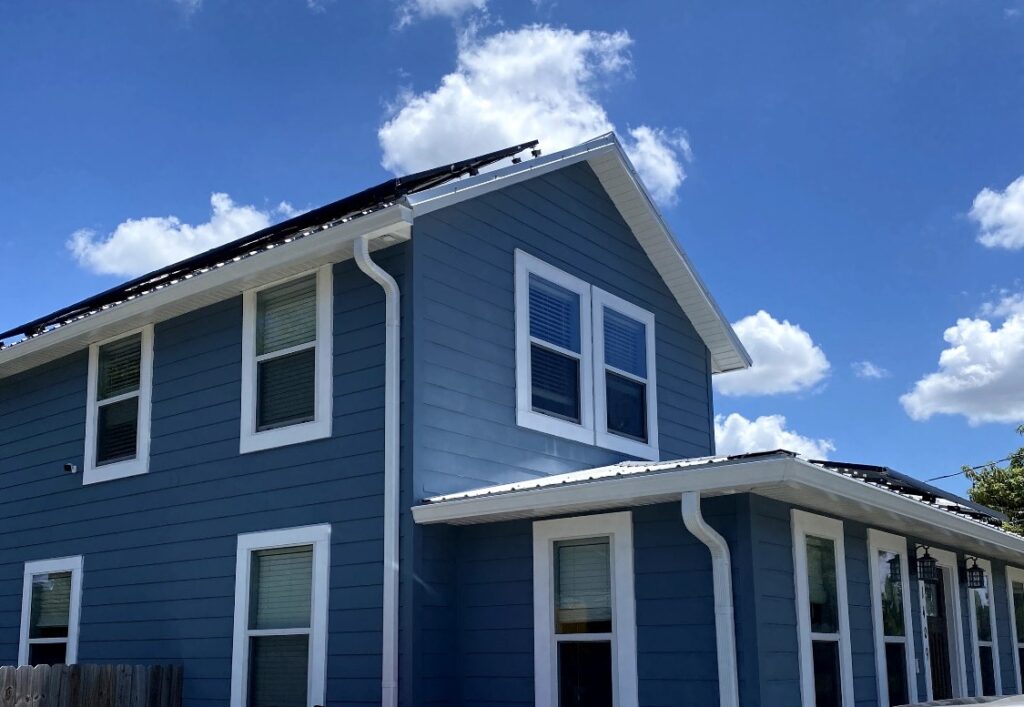

If you are replacing a roof on a Reading or Berks County home, decide what will happen to the gutters before work starts. Keeping the old system, temporarily removing it, and installing new gutters are different scopes. None should be left to an assumption between the homeowner, roofer, and gutter installer.
The aim is to avoid paying for work twice or discovering after the roof is finished that an attachment, roof-edge detail, or downspout route still needs attention. Use the planning sequence below to coordinate the jobs without treating gutter replacement as automatically necessary.
First decide whether the existing gutters are staying
Ask the roofer whether the proposed roof work requires gutters or downspouts to be removed. Then request an assessment of the existing gutter system if you are unsure about its condition. If the system will stay but has leaks, loose sections, or attachment problems, review the separate Pennsylvania gutter repair scope before dates are set. A sound gutter may be a candidate for retention, while damaged sections, failed attachments, or an unsuitable layout may make replacement worth discussing.
Do not compare a price to leave gutters in place with a price that includes removal, disposal, and a complete new system. Those are different jobs. If gutters are to be reused, get agreement on who removes them, where they will be stored, and who reinstalls and checks them.
Assign one owner to each roof-edge detail
The gutter meets several other components at the eave. Before scheduling installation, have the contractors explain how the finished roof edge, drip edge, fascia, and gutter will meet on your home. The detail needs to work as a whole so runoff enters the gutter rather than bypassing it. See our guide to positioning gutters below the drip edge in Pennsylvania.
Ask who is responsible for correcting fascia or other roof-edge deterioration if it is discovered. A new gutter does not repair the surface supporting it, and replacing a roof does not necessarily include every fascia or soffit repair. Keep those boundaries visible in each proposal.
Gutters Marketplace LLC’s Pennsylvania soffit and fascia service page describes the related service. Use the property-specific scope to confirm the exact work needed; do not assume it is part of a gutter installation price.
Agree on the sequence before choosing dates
The following is a coordination outline, not a fixed construction schedule. The contractors should confirm the actual order for the roof system, access requirements, and condition of your property.
| Stage | Decision to confirm |
|---|---|
| Before roof work | Which gutters stay, which are removed, who handles them, and where temporary roof runoff will go. |
| Before gutter installation | Whether the relevant roof edge and fascia are ready, final details are agreed, and any required preparation is complete. |
| At handover | Who checks gutter attachment, flow toward outlets, downspout routes, cleanup, and any remaining separate work. |
If roofing dates change because of weather or concealed repairs, tell the gutter installer before they arrive. A tentative date should not be treated as confirmation that the roof edge is ready.
Plan for rain between the two jobs
Ask how roof runoff will be managed if a period without gutters is expected. Point out entrances, basement window wells, planting beds, and places where water already collects. Do not move water toward a neighbor’s property or create a trip hazard with a temporary arrangement.
Discuss who provides any temporary measure and who removes it. If grading, buried drainage, or waterproofing is necessary, that may require a separate qualified professional rather than a change to the gutter alone.
Preserve or revise the downspout plan deliberately
Mark the existing downspout locations before removal. If a route works well and connects to an existing drain, identify whether the new proposal retains it. If a downspout will move, ask where it will terminate and which elbows, extensions, or connections are included.
Reconnecting to a buried pipe is not the same as inspecting or repairing that pipe. Put the boundary in writing so a blocked underground line is not mistaken for unfinished gutter work.
Document handover between contractors
Keep a short record of the agreed gutter runs, color and specification, downspout locations, excluded work, and the contact responsible for each stage. Photos before removal and after completion help preserve the layout and visible condition without making claims about hidden damage.
Request the applicable workmanship and product warranty documents from each contractor. If you have questions about how one trade’s work affects another warranty, ask the responsible contractor or manufacturer rather than relying on an informal promise.
Discuss the gutter scope before your roof project starts
For a Reading, Berks County, or nearby Pennsylvania property, review Pennsylvania seamless gutter installation and contact Gutters Marketplace LLC. Call (484) 339-4177 or email guttersmarketpa@gmail.com. Include your roofer’s proposed timing, whether existing gutters will be retained, and which roof edges you want assessed.