
Pennsylvania Soffit & Fascia Specialists
Soffit & Fascia.
Soffit and fascia repair or replacement in Reading and Berks County, PA, including practical solutions for damaged soffit, rotted fascia, ventilation, and the gutter attachment edge.
No upfront payment on approved work. Pay after the agreed project is complete.
What to Check
The roof edge gives clues.
Do not ignore them.
Soffit and fascia problems often show up as visible changes around the eaves or a gutter that no longer sits securely.
01
Stains or Soft Fascia
Peeling finish, dark streaks, soft wood, or repeated moisture near the gutter line deserve a closer look.
02
Loose or Sagging Soffit
Open seams, dropped panels, missing sections, and visible gaps can leave the underside of the roof edge exposed.
03
Ventilation Concerns
Blocked or poorly planned intake can contribute to trapped heat and moisture. The existing roof system must guide the layout.
04
Loose Gutter Attachment
A gutter that pulls away from the home may point to failing fasteners, damaged fascia, or more than one issue at the roof edge.
One Connected Roof Edge
Three visible parts.
One coordinated plan.
Soffit panels finish the underside of the overhang. Fascia boards form the front edge and often support gutter attachment. Gutters carry roof runoff away. We assess how these parts meet before writing the repair or replacement scope.
Soffit
Vented or solid panels selected around the existing roof and attic ventilation design.
Fascia
The visible roof-edge finish and the condition behind approved gutter attachment areas.
Gutters
Removal, reset, repair, or replacement is coordinated only when the project requires it.
Vinyl or Aluminum
One clean profile.
Two practical materials.
We focus on the narrow Triple 4 profile shown here. The material choice depends on the existing exterior, roof-edge condition, desired finish, and approved project scope.
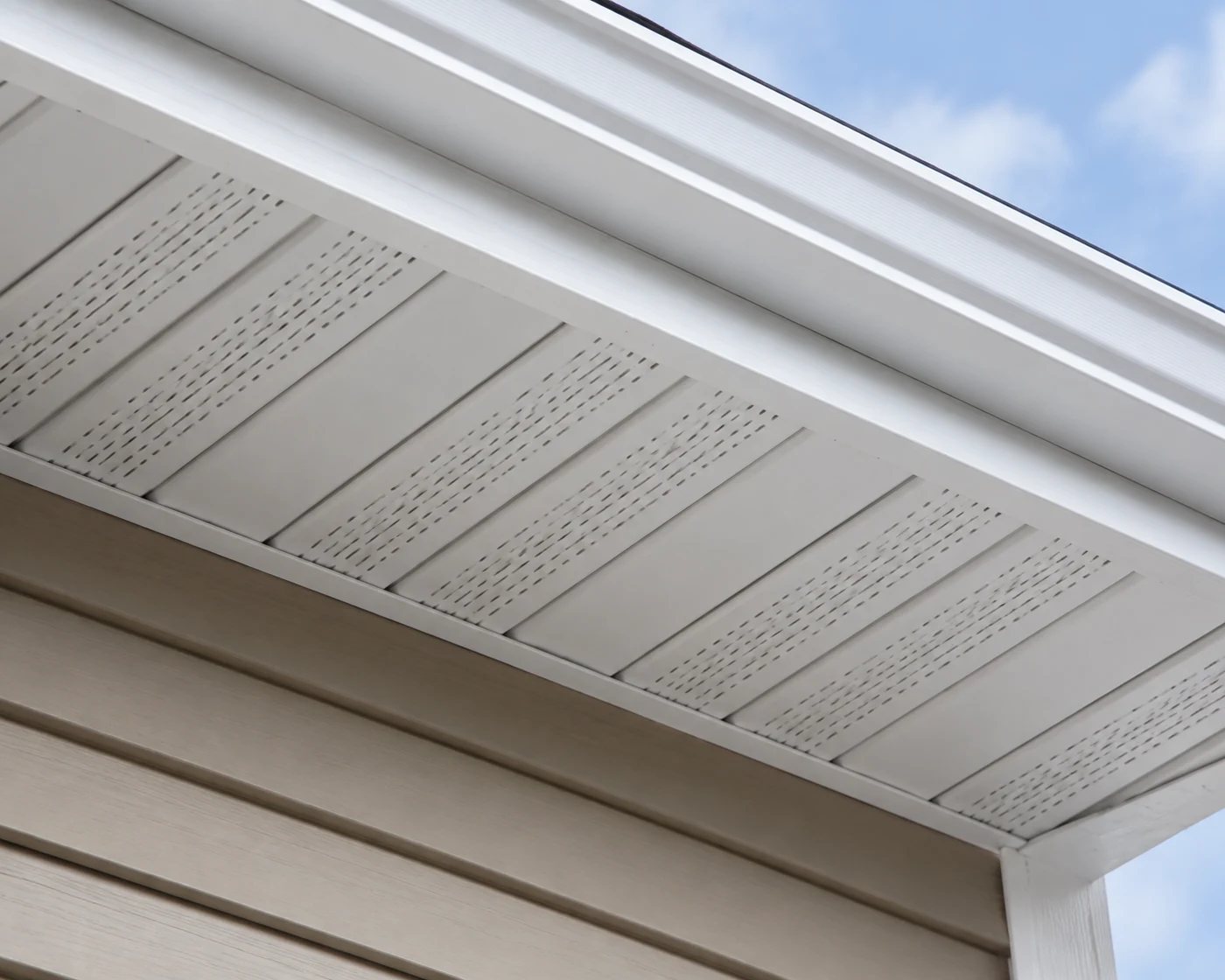
01 · Triple 4 profile
Vinyl Soffit
A clean, low-maintenance option with a subtle surface and evenly spaced intake openings. Color and ventilation placement are confirmed for the home.
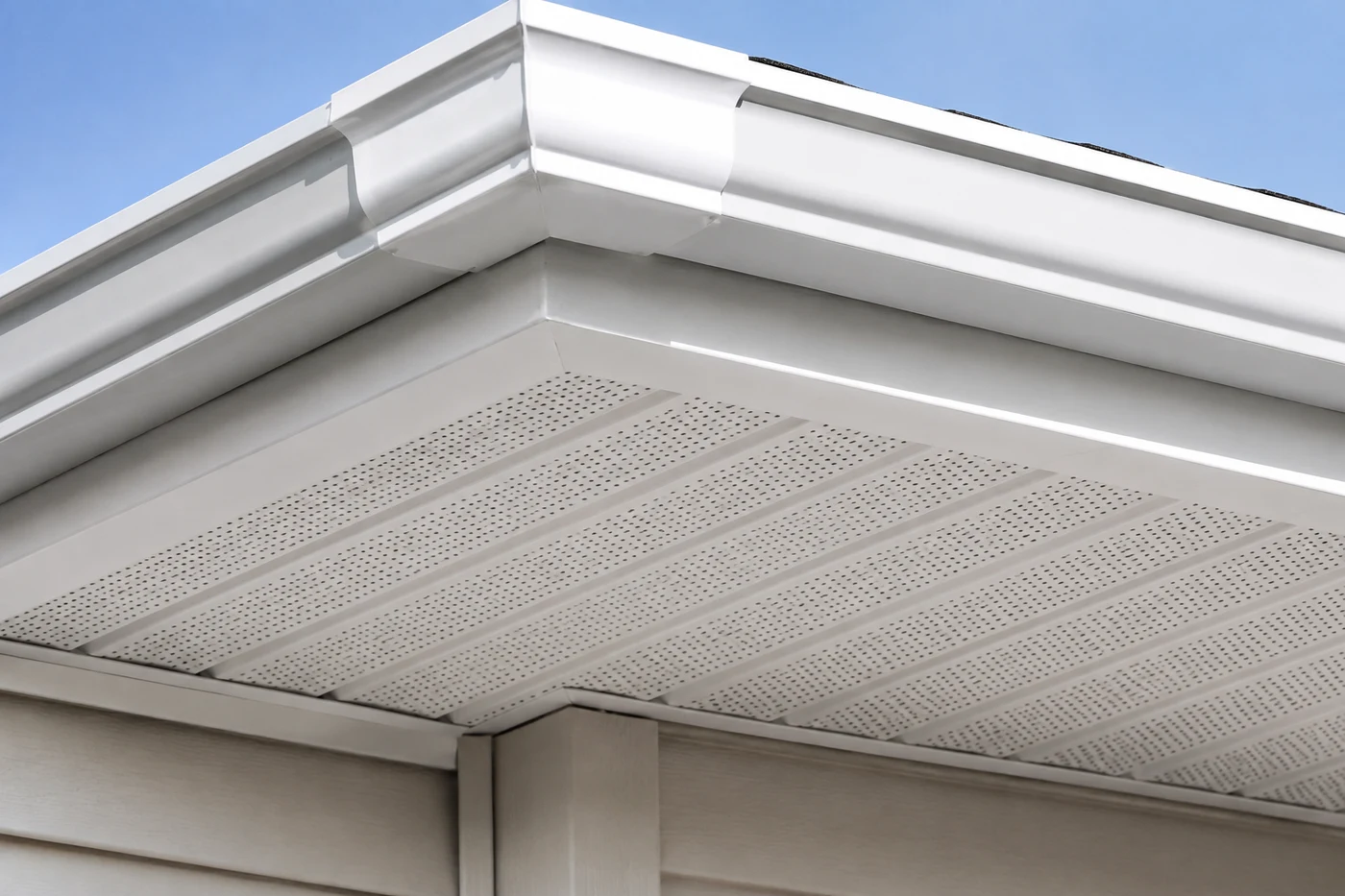
02 · Triple 4 profile
Aluminum Soffit
A crisp metal option with a rigid roll-formed finish. It can be coordinated with aluminum fascia coverage and the gutter attachment line.
Do Not Forget the Fascia
The front edge matters as much as the underside.
Fascia creates the visible line behind the gutter. We review the condition, approved replacement or covering, color, trim, and gutter connection as part of the same roof-edge plan.
Material, Triple 4 profile, ventilation layout, fascia finish, color, and warranty terms are confirmed in writing. The estimate is built around the home, not a universal package.
What the Estimate Can Include
Fix the affected area.
Finish the whole connection.
Every item is based on the property. The estimate separates required roof-edge work from optional gutter coordination so you can see exactly what you are approving.
Condition Review
We inspect accessible soffit, fascia, roof-edge transitions, and gutter attachment points before recommending the scope.
Measured Replacement
We measure affected runs in linear feet to document soffit panels, fascia boards, removal, trim, and finish details.
Vented or Solid Layout
Panel type is selected around the home’s existing ventilation design, not from a one-size-fits-all assumption.
Coordinated Finish
Available profiles and colors are reviewed to create a clean transition with the siding, roof edge, and gutters.
Fascia & Trim Work
The written estimate identifies approved fascia replacement, covering, trim, and preparation needed for the visible roof edge.
Gutter Coordination
If gutters must be removed, reset, repaired, or replaced for the work, that step is shown separately before scheduling.
How It Works
See the issue.
Approve the full plan.
You should know what is being removed, installed, coordinated, and charged before work begins.
- 01
Share the property
Send the address and tell us what you see along the affected roof edge.
- 02
Review the roof edge
We inspect accessible soffit, fascia, ventilation conditions, gutter attachment, and project access.
- 03
Approve the written scope
You see the affected areas, material and profile, related gutter work, price, and warranty terms.
- 04
Install and check
We complete the approved work, review the visible finish, clean the area, and collect payment after completion.
Verified Google Reviews
Clear quotes.
Careful exterior work.
 Google Reviews5.0
“They stuck to the quote and had incredible attention to detail.”
“The team was fast, professional, and everything looks like new now.”
“Everything is handled professionally, quickly, and without any hassle.”
Pennsylvania Service Area
Not sure we serve your address?
Let’s check.
We serve homes within up to 50 miles of ZIP 19608 in Sinking Spring, Pennsylvania. Coverage includes only locations within this radius, not entire counties. Send your property ZIP code to confirm availability.
Check My AddressReading, PASinking Spring, PAWyomissing, PAWest Lawn, PAShillington, PAWernersville, PAMohnton, PABirdsboro, PAFleetwood, PAKutztown, PALeesport, PAHamburg, PABoyertown, PAPottstown, PAPhoenixville, PALancaster, PALebanon, PAAllentown, PABethlehem, PAEaston, PAWest Chester, PAHarleysville, PAWarrington, PAMedia, PAEphrata, PADenver, PADouglassville, PAMorgantown, PAElverson, PACollegeville, PAQuakertown, PACoatesville, PATemple, PABlandon, PALititz, PAExeter Township, PAOley, PA
Soffit & Fascia FAQs
Useful answers.
Before the estimate.
Start with the visible concern. We will help determine whether the project is isolated or connected to the gutter system.
Have a question? Call (484) 339-4177Common signs include peeling paint, stains, soft or deteriorated material, sagging panels, open seams, pest entry, and gutters pulling away from the roof edge. We inspect the visible condition before recommending repair or replacement.
Not always. The right scope depends on how much material is affected, whether the substrate is sound, and how the existing sections can be finished cleanly. Your estimate identifies the exact runs included.
That depends on the home’s existing attic and roof ventilation design. Vented soffit can provide intake air when it is part of a balanced system, while solid panels may be appropriate in other areas. We do not recommend a profile without reviewing the property.
Yes, when the conditions are related. If gutters need to be removed, reset, repaired, or replaced to complete the roof-edge work correctly, those details can be included in one written plan.
Pricing depends on measured footage, home height, access, removal and preparation, the condition behind the visible finish, material and profile selection, and any related gutter work. We confirm the scope and price before scheduling.
Timing depends on the amount of removal, home height, access, material availability, and whether fascia or gutter work is included. We provide the expected schedule with the approved project details.
Planning a gutter project with confidence
Every gutter project starts with the way water moves across one specific roofline. On a site visit, the useful details are the length and height of each run, valleys that concentrate runoff, the condition of the fascia, existing drainage routes, ground slope, and the location of doors, walks, landscaping, and utilities. Those details help determine whether the right answer is a targeted repair, a replacement section, a new continuous run, an added downspout, or a related roof-edge improvement.
For homeowners in Pennsylvania and the Berks County area, a written scope is easier to compare when it explains the proposed materials, attachment approach, downspout locations, removal of old components, and any access limitations. It should also distinguish work that is included today from items that may be worth addressing later. A clear plan keeps the conversation focused on drainage and durability rather than on a single number with no context.
Before requesting an estimate
- Share the property address and the best way to reach you.
- Describe where you see overflow, leaks, sagging, clogs, or runoff.
- Point out prior repairs, roof work, or areas with limited access.
- Keep pets and vehicles clear of the work area when a visit is scheduled.
- Ask how water will travel from the roof edge to a safe discharge point.
A professional recommendation should match the condition that is actually present. For example, cleaning can restore a clear path when debris is the cause, while a persistent slope, fastening, seam, capacity, or discharge issue may call for a different solution. Reviewing the roofline and drainage path together helps avoid a short-term patch when a more durable correction is needed.
The final scope can then be scheduled around weather, access, and the property’s needs. After the work is complete, a useful closeout includes checking the visible line, confirming downspout routing, removing job debris, and explaining any basic care that will help the system continue to perform.
Understanding the scope from roof edge to discharge
A durable gutter solution is based on the whole route water follows. Roof area and pitch affect how much water arrives, while valleys can concentrate that flow into one short section. The gutter run must be positioned and supported so water can move toward outlets, and each downspout needs a practical path to the ground. Existing trim, roof materials, landscaping, walkways, gates, and utilities are part of the planning conversation because they determine where installers can work and where discharged water can travel safely.
When reviewing a proposal, compare the work by function. Identify which sections are being cleaned, repaired, replaced, extended, or rerouted; where new outlets or downspouts are proposed; and how the finish will connect at corners and transitions. If a condition cannot be confirmed until work begins, the estimate should explain that possibility instead of treating it as a surprise. This kind of scope makes it easier to decide whether a repair is appropriate now or whether replacement and drainage changes would give better long-term value.
Good preparation also protects the property during the visit and the installation. Provide access notes, keep vehicles clear of the immediate work zone when possible, and mention irrigation, lights, fences, pets, or delicate plantings near the roofline. After work, inspect the visible alignment from the ground, confirm that downspout paths are clear, and keep the written scope for future maintenance. Regular observation after normal rainfall is the safest way to spot a changed flow pattern before it becomes a larger exterior problem.
Ready for a Clear Roof Edge?
Start with the address.
We’ll inspect the rest.
Share your name, phone number, and ZIP code. We’ll call to discuss what you see and arrange the next step.
Call Now: (484) 339-4177Pennsylvania homeowner guides
Helpful reading before your estimate
Local guidance for common gutter decisions in Reading and Berks County.