
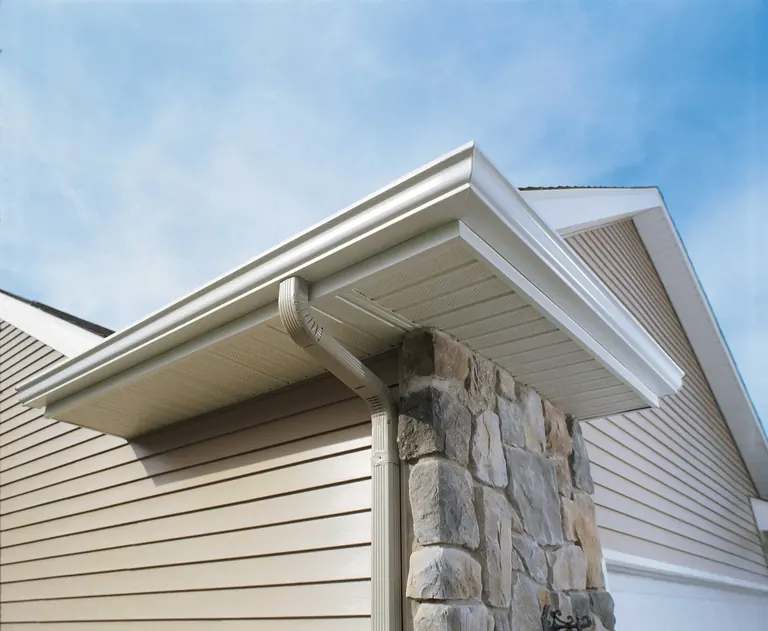
A downspout is only useful if the water has a safe place to go. Around a Berks County home, the best outlet is not simply the closest patch of lawn. It should move roof runoff away from the foundation without sending it toward a walkway, neighboring property, or an area that already stays wet.
This homeowner checklist explains what to inspect during and after rain. It does not replace a property-specific drainage assessment, but it can help you describe the problem clearly before requesting gutter repair or replacement.
Start at the end of each downspout
Walk around the house and note where every downspout ends. Look for missing extensions, disconnected elbows, crushed sections, loose joints, or outlets that point back toward the building. An outlet can look acceptable in dry weather and still cause trouble when a large roof area drains through it during a storm.
Do not assume every downspout needs the same arrangement. The correct outlet depends on the roof area feeding it, the slope of the ground, nearby hard surfaces, and any existing drainage system.
Watch the water path during a normal rain
From a safe location at ground level, observe where the discharge travels. The useful question is not only whether water exits the downspout, but what happens next.
- Does the water continue away from the house, or turn back toward the foundation?
- Does it collect beside basement walls, steps, or window wells?
- Does it cross a driveway, walkway, or entrance?
- Does it wash soil or mulch out of a planting bed?
- Does it surface from an underground connection or back up at the adapter?
A single observation is more helpful when you record the approximate rainfall, which downspout was involved, and how long the wet area remained afterward.
Use the ground slope as the first clue
An extension works best when the surrounding grade carries water farther away. If the soil slopes toward the house, simply adding a longer outlet may move the puddle without solving the return path. Low spots can also trap runoff and keep the soil wet near the building.
A gutter contractor can evaluate the gutter and downspout layout. Gutters Marketplace installs underground downspout drainage with buried 4-inch PVC when the property and approved route are suitable. Significant grading, foundation waterproofing, or broader stormwater work may require a different qualified professional; the written estimate keeps those scopes clear.
Check whether one downspout is handling too much roof runoff
If water repeatedly spills over the gutter near the same area, the outlet location may not be the only issue. Debris, an obstructed elbow, an incorrect gutter pitch, a loose section, or a downspout layout that does not match the roof may all contribute.
After the weather clears, inspect from the ground for visible sagging, separated joints, staining, or debris at the outlet. Avoid climbing during wet or windy conditions. Gutters Marketplace LLC provides gutter repair service for Pennsylvania properties when the system needs a closer evaluation.
Treat underground connections as a separate system
A downspout that enters the ground is connected to something you cannot fully evaluate from the roofline alone. The buried line may lead to an approved discharge point, a dry well, another drainage feature, or an unknown termination. Slow drainage, water rising at the adapter, or persistent wetness along the presumed route can indicate a problem beyond the gutter itself.
Ask any contractor to state where their work ends. Reconnecting a downspout to an existing underground pipe is different from inspecting or repairing that buried line. The proposal should identify what is included rather than leaving the responsibility unclear.
Avoid creating a new hazard
Do not route water where it can freeze across a walking surface, undermine a step, damage landscaping, or discharge onto another property. Local rules and site conditions may also limit where roof runoff can be directed. A universal distance is not a substitute for observing the actual slope and approved drainage path at the property.
If an extension must cross an area used for mowing or walking, discuss an arrangement that can be maintained without being left disconnected after yard work.
Photograph these details before requesting an estimate
A few clear, ground-level photos can make the first conversation more productive:
- the full wall and roof edge served by the downspout;
- the downspout from the gutter outlet to the ground;
- the discharge point and surrounding slope;
- any puddling, erosion, staining, or overflow;
- nearby doors, walkways, window wells, and drainage connections.
Include when the problem occurs: every rain, only heavier storms, after leaves fall, or after an underground connection was added. Those details help distinguish a maintenance issue from a layout or repair question.
When a new gutter layout may be worth discussing
If the existing system repeatedly concentrates water in an unsuitable location, replacing the same components in the same positions may reproduce the problem. A property-specific proposal can show the planned gutter runs, outlet locations, downspout routes, and the point where the contractor’s scope ends.
For a broader roofline project, review the Pennsylvania gutter installation service and ask for the proposed layout in writing.
Choose between moving water, storing it and letting it soak in
Before selecting an outlet, identify what the proposed system actually does. A solid pipe conveys water to another location. A rain barrel stores a limited amount for later use. A rain garden temporarily holds runoff while suitable soil absorbs it. These functions can work together, but they are not interchangeable. An underground pipe does not establish that its destination can accept the water, and a container does not provide unlimited storm storage.
A rain barrel needs a full-barrel route and a winter route
The Berks County Conservation District’s rain-barrel guidance describes collection for outdoor uses, with a screened inlet, overflow and a secure base capable of supporting the filled barrel. Stored roof runoff is not drinking, cooking or bathing water. For drainage planning, trace the overflow all the way to its destination; the district advises keeping it away from structures, paved walking areas and neighboring property.
There are two operating conditions to discuss: available storage before rain and a barrel that is already full. Ask where incoming water goes in the second condition, including whether the overflow connection is clear and securely attached. For freezing weather, the district recommends disconnecting the barrel and restoring the original downspout as a better option than leaving it connected. Include that seasonal connection in the plan so removing the barrel does not leave roof runoff dropping beside the foundation.
Check soil performance before choosing a rain garden
The Rutgers Rain Garden Manual of New Jersey distinguishes a soil infiltration test from simply choosing a planting bed. Its testing procedure wets the soil first, then measures water-level changes after refilling. It also warns that dry-weather results can differ from results during a wetter season. A quick disappearance of water into dry ground is therefore not enough evidence for a permanent outlet decision.
Ask the person assessing the site to record the test location, date, starting conditions and measured drainage, and explain how those results affect the proposed receiving area. A soil fertility or pH report answers plant-growing questions; it does not replace a timed drainage measurement. If the proposed location drains poorly, changing the location or the design needs consideration before connecting the downspout. Do not treat a bag of soil amendment as proof that an unsuitable location has become suitable.
Plan the overflow and maintenance access together
Portland’s residential rain-garden guidance illustrates the general design relationship: the receiving area must match both the runoff directed to it and tested soil infiltration. It also calls for an escape route when the garden is full and ongoing checks for sediment, debris and erosion at its inlet. These are useful planning principles; Portland’s numerical setbacks and permit rules are not Pennsylvania requirements.
For a Berks County proposal, have the actual location, contributing roof area, inlet, overflow route and access for clearing debris identified together. The person responsible for the receiving feature should confirm its suitability before a gutter installer directs additional runoff into it. Keep the scope explicit: connecting a leader to an agreed inlet does not by itself include designing a rain garden, correcting grading or obtaining approval for a new discharge.
Two hypothetical outlet decisions
A barrel beside a side entrance: suppose the barrel collects water successfully, but its overflow hose ends on the entry path. Adding another barrel would increase storage without resolving where water goes after all containers fill. The useful discussion is the full-system overflow route and the downspout arrangement when the barrels are removed for winter. Record those as separate parts of the proposed work rather than treating the barrel purchase as a completed drainage repair.
A pipe leading to a proposed garden: suppose a homeowner wants a buried leader to end in a landscaped depression. Before agreeing to that termination, the receiving-area assessment is still needed. A clear pipe and a successful brief flow check establish conveyance under the test conditions; they do not establish seasonal infiltration performance. The written handoff should identify who assessed the receiving area, which outlet was agreed, what was actually tested and who will maintain the inlet and overflow. These examples describe decisions to resolve, not verified conditions at a particular customer’s property.
Request a Pennsylvania gutter assessment
Related Pennsylvania gutter guides: why gutters overflow during heavy rain and how often Berks County gutters need cleaning.
To discuss a Berks County or nearby Pennsylvania property, contact Gutters Marketplace LLC through the Pennsylvania contact page. Call (484) 339-4177 or email guttersmarketpa@gmail.com. Share the affected downspout location, what happens during rain, and any photos taken safely from the ground.