
6-inch K-style profilePlanned for Florida rainfall
Seamless gutter installation · Central Florida
6-Inch Seamless Gutter Installation.
Orlando & Central Florida.
Professional 6-inch seamless gutter installation for Orlando and Central Florida homes, including custom-formed aluminum runs, planned downspouts, and a written project scope.

Custom formedLong seamless runs made on site
Custom-formed runsFewer common seam points
More than 20 colorsFinal sample confirmed on site
Written project scopeClear before scheduling
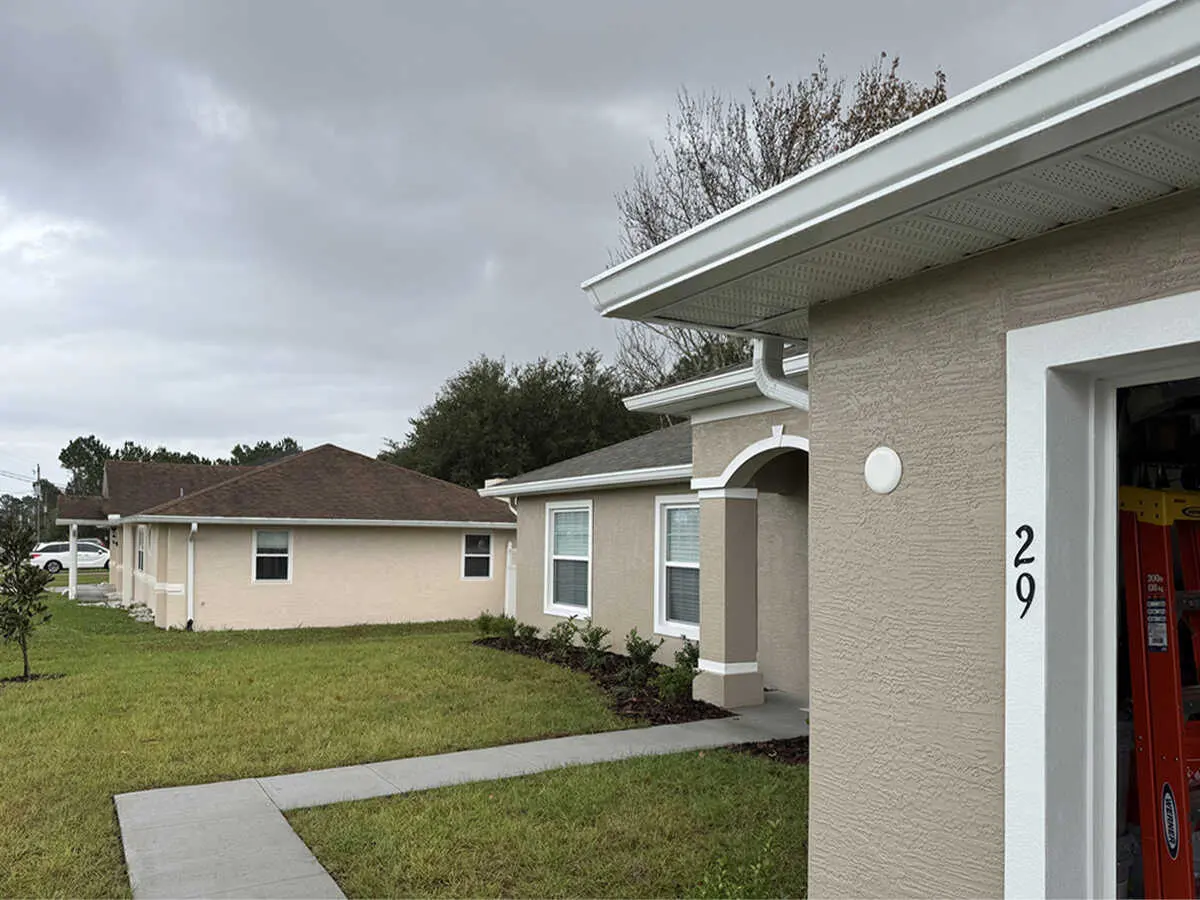
What installation includes
More than a gutter.
A complete water path.
A strong installation follows the water from the roof edge to a safe discharge point. Every approved project is measured for the property.
Roofline measurements
Lengths, corners, roof valleys, and access conditions are reviewed before forming. See why water can overshoot gutters at roof valleys
Seamless aluminum runs
Approved runs are formed on site to the measured dimensions.
3×4 downspout planning
Our standard 3×4 downspouts are placed around roof runoff, drainage, and the exterior.
Pitch and final review
The installed system is checked for fit, slope, attachment, and runoff direction.
Why the system is built this way
Capacity where it matters.
Clean lines everywhere else.
The gutter profile, material, and attachment details work together to manage roof runoff and complement your home.
6-inch K-style gutters
A larger profile gives roof runoff more room to move through long runs, valleys, and corners.
Rust-resistant aluminum
Coated aluminum is lightweight, available in many finishes, and suited to custom forming.
Concealed installation details
Hangers, fasteners, outlets, and downspouts are selected as parts of one planned system.
Finish options
Choose the color
at the house.
More than 20 available color options can be compared with the roof, fascia, and exterior. Final availability is confirmed with a physical sample.
Screen colors are only a starting point. The approved finish should always be confirmed against the property before installation.
Classic White
Linen
Almond
Clay
Black
Royal Brown
Forest Green
Coppertone
Simple from the first call
Four steps.
No guesswork.
From the first request to the final review, you know what happens next and approve the scope before installation.
Start with my address →Tell us about the property
Share the address, your contact details, and what you would like us to review.
Review the roofline
We confirm dimensions, drainage needs, access, colors, and downspout locations.
Confirm the scope
The recommended system and project pricing are documented before scheduling.
Complete and review
The system is installed and checked for fit, pitch, attachment, and water routing.
Before you schedule
Straight answers.
No sales maze.
Get clear answers about gutter materials, color choices, drainage planning, and what goes into your estimate.
Ask us: 407-987-4080What type of gutters do you install? +
We install custom-formed aluminum seamless gutter systems based on the approved property measurements and scope.
Are the gutters formed on site? +
Yes. Approved gutter runs are produced at the property to the measured dimensions.
Can I choose the gutter color? +
Yes. More than 20 finish options may be available, and the final color is confirmed with the project.
How are downspout locations selected? +
Placement is planned around roof runoff, exterior conditions, access, and practical discharge routing.
What affects the final estimate? +
Roofline length, height, access, existing conditions, material choices, corners, and downspout requirements can affect scope and price. For isolated problems, review our gutter repair service.
Central Florida installation area
Local service.
One easy check.
Send the property address and the team can confirm installation availability for your neighborhood.
Check my address →OrlandoOviedoWinter ParkWinter SpringsCasselberryAltamonte SpringsLake MaryNearby communities
Ready when you are
Measure the roofline.
Build the right system.
Installation details that matter
Plan the roof edge before the gutter is formed
A seamless run performs as part of a roof-edge system, not as a separate piece of trim. Before fabrication, the installer should evaluate the fascia condition, roof runoff, valleys, outlet locations, downspout routes, and the surfaces where discharged water will travel. That review helps determine whether a long run needs additional drainage capacity or a different outlet plan instead of relying on appearance alone.
Drip edge coordination
Where a drip edge is present, runoff needs a clear path into the gutter. The back or upper gutter edge is commonly positioned beneath or behind the lower drip-edge edge when the roof assembly and manufacturer instructions allow it. Existing metal should not be lifted, cut, or damaged without first checking the roof construction.
Attachment and pitch
Concealed hangers, fastening points, fascia soundness, and a controlled slope work together. A gutter can look straight from the ground and still hold water if the support or pitch is inconsistent. Learn what we check during gutter repair diagnosis.
Outlet planning
Outlets and downspouts should be planned around roof area, valleys, corners, and practical discharge locations. A larger gutter without a workable downspout path is still an incomplete drainage system.