
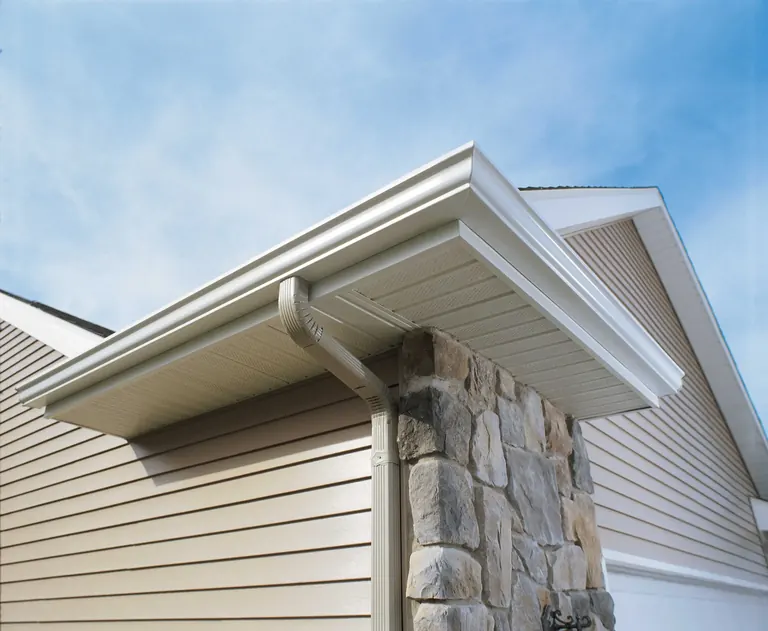
Deciding between gutter repair and replacement in Central Florida should begin with the cause of the problem. A leak at one corner may need a focused repair. Repeated overflow along several roof edges may point to a larger layout, capacity, outlet, or attachment problem.
The goal is not to replace the most material or apply the smallest possible patch. It is to choose a scope that restores a reliable path from the roof edge to a practical discharge point. This guide explains the conditions that often support repair, the signs that make replacement more reasonable, and the questions homeowners should ask before approving the work.
Start with the symptom—and trace it to the cause
Where the water appears matters. Water can pass over the front of the gutter, run behind it, escape through a corner, drip from an end cap, or leak at a downspout connection. Each symptom suggests a different group of possible causes.
For example, overflow may come from debris, too few outlets, a restricted downspout, concentrated valley runoff, poor pitch, or a gutter that does not suit the roof area. Sealing a joint will not solve a blocked outlet. Adding a larger gutter will not fix a damaged mounting surface.
When a targeted gutter repair may make sense
One leaking corner or joint
A localized leak may be repairable when the surrounding gutter is secure, correctly positioned, and otherwise in serviceable condition. The old sealant and the joint condition should be evaluated before new material is applied. Homeowners can review the detailed Central Florida gutter-joint leak checklist.
A loose hanger or short detached section
A limited attachment problem may be repairable when the fascia is sound and the gutter has not been permanently bent or twisted. Simply adding fasteners without checking the mounting surface can hide a roof-edge problem.
A damaged downspout component
Crushed elbows, separated joints, loose straps, and damaged lower sections do not always require replacing every gutter run. The repair should restore the full path from the outlet to the agreed ground-level discharge point.
A localized pitch or outlet problem
If one section holds water or sends it away from the outlet, the installer may be able to adjust the run or correct a limited outlet issue. The feasibility depends on run length, existing fastener holes, gutter condition, and fascia strength.
Limited storm or impact damage
A branch, ladder, or isolated wind event may damage one portion of an otherwise functional system. Matching the existing profile, color, and condition should be discussed before approving a partial replacement.
When replacement may be more practical
Multiple leaks across the system
Repeated corner, seam, end-cap, and outlet failures can indicate that the system has reached a point where isolated repairs will not provide a durable result. The contractor should identify whether the failures come from age, movement, installation details, or a larger drainage problem.
Widespread sagging or poor attachment
Several low areas, loose runs, or visible waves may mean the attachment pattern and pitch need to be rebuilt rather than adjusted in one place. The fascia condition should be checked before new gutters are installed.
Corrosion, cracks, or material deterioration
When the metal is deteriorated in multiple locations, new sealant or fasteners may not hold reliably. Replacement can provide a clean continuous run instead of a growing collection of patches.
The system is undersized or poorly laid out
A gutter may be physically intact but still fail during heavy rain because roof valleys, long runs, outlet count, or downspout capacity were not planned for the property. Gutters Market installs 6-inch K-style seamless gutters in Central Florida with the gutter runs and downspout routes considered together.
Water repeatedly runs behind the gutter
Water behind the gutter can involve attachment, roof-edge details, pitch, flashing, or fascia condition. It should not be treated automatically as a sealant problem. The article on water running behind Central Florida gutters explains the main areas to inspect.
Roof-edge repairs are already required
If deteriorated fascia or soffit must be replaced across a long section, removing and reinstalling an older gutter may not be the best long-term use of labor. The scopes should be coordinated so the new mounting surface and gutter plan work together. See the Florida soffit and fascia service for the roof-edge side of the project.
Cleaning should be ruled out before structural conclusions
Leaves, roof grit, seed pods, and debris near outlets can create overflow that resembles a sizing or pitch problem. Accessible gutters and downspouts should be checked before deciding that the entire system needs replacement.
If buildup is the main issue, professional gutter cleaning in Central Florida may restore flow and reveal whether any repair remains necessary.
How repair and replacement costs differ
A repair quote usually reflects diagnostic time, access, the affected components, matching work, and the possibility that concealed conditions become visible during service. A replacement quote is shaped by measured roofline, corners, removal, gutter profile, outlets, downspouts, access, and discharge planning.
The lowest immediate price is not always the lowest long-term cost. Repeatedly repairing a system with widespread failures can exceed the value of a planned replacement. At the same time, replacing serviceable runs because of one isolated leak can create unnecessary expense.
For a fuller breakdown of installation pricing factors, read what affects gutter installation cost in Central Florida.
What a useful inspection should document
- where water leaks, overflows, or remains after rain;
- whether the gutter is loose, bent, separated, or visibly out of pitch;
- the condition of corners, end caps, outlets, and downspout joints;
- the condition of the fascia at attachment points;
- roof valleys and upper-roof areas that concentrate runoff;
- the number and location of downspouts;
- where each downspout releases water;
- which sections appear serviceable and which do not.
Photos and a written scope make it easier to understand why repair or replacement is being recommended.
Questions to ask before choosing a scope
- What is the underlying cause of the problem?
- Which exact sections can be repaired?
- Which conditions make repair unreliable?
- Is the fascia suitable for reattachment or new installation?
- Will the existing outlets and downspouts handle the roof runoff?
- Where will the water discharge after the work?
- Are removal, disposal, and cleanup included?
- How will additional work be approved if concealed damage is found?
Request a property-specific assessment
Gutters Market provides gutter repair and 6-inch seamless gutter installation across Orlando, Oviedo, and Central Florida. We review the visible problem, explain the likely cause, and define the proposed scope before work begins.
Use the Florida estimate form or call 407-987-4080 to discuss the property.