
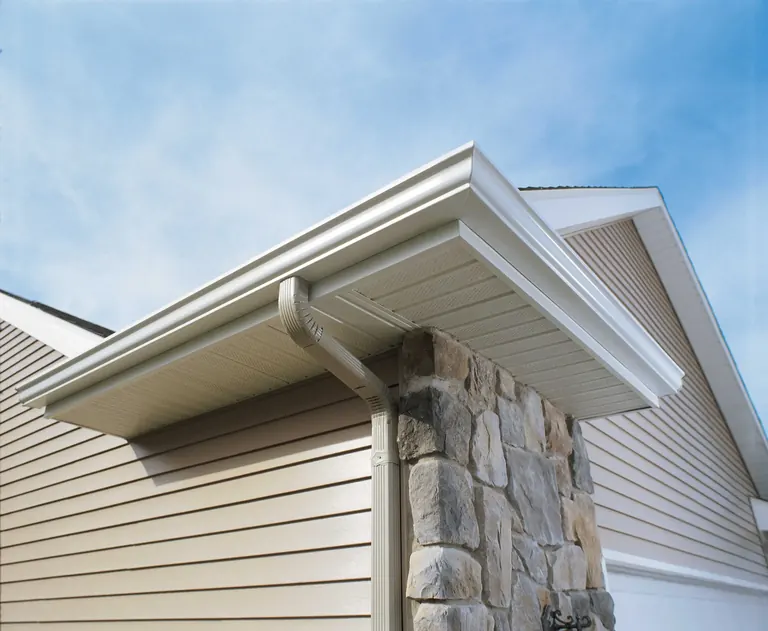
A gutter that is pulling away from the roof edge is more than a cosmetic problem. The gap can let water run behind the gutter, place extra stress on fasteners, and send runoff onto fascia, soffit, siding, or the ground beside the home. On a Central Florida property, the problem often becomes most visible during a strong downpour—but the cause may have developed gradually.
Homeowners can spot many warning signs from the ground. The repair itself, however, should start with an inspection of the gutter, fasteners, fascia, roof edge, and drainage path. Simply pushing the gutter back into place does not address the reason it moved.
Common reasons a gutter separates from the fascia
Loose, missing, or poorly spaced fasteners
Gutters depend on hangers or other fasteners to hold their shape and position. If a fastener loosens, pulls out, or was installed with too much distance between supports, a section can begin to sag. Once the gutter changes position, standing water and debris can add even more load.
Water and debris staying in the gutter
A clogged outlet or downspout can leave water in a gutter longer than intended. Wet leaves and other debris also add weight. The first visible symptom may be a low section or a widening gap at the fascia, even though the blockage is elsewhere in the run.
Damaged or weakened fascia
A fastener can only hold securely when the material behind it is sound. If the fascia is soft, split, deteriorated, or already separating from the roof structure, tightening the existing hanger may provide only a temporary result. The condition of the supporting surface should be checked before the gutter is reattached.
Incorrect pitch or a deformed gutter run
Gutters need a controlled path toward an outlet. A run that is poorly pitched, twisted, or bent may hold water in the wrong area. Repeated loading can stress the hangers and pull the gutter edge out of alignment.
Concentrated runoff at a roof valley
A roof valley directs water from multiple roof surfaces toward a relatively small section of gutter. If that location repeatedly receives concentrated flow, any weakness in the support or drainage layout can become more noticeable. Overflow at a valley does not automatically mean the gutter only needs another screw; capacity, outlet placement, pitch, and roof-edge details may all matter.
Warning signs you can check safely from the ground
- a visible gap between the back of the gutter and the fascia;
- one section sitting lower than the surrounding run;
- water dripping or staining behind the gutter;
- overflow from the same location during ordinary rain;
- loose or tilted downspouts connected to the affected section;
- peeling paint, discoloration, or deterioration along the fascia or soffit;
- water collecting near the wall below the separated section;
- a gutter edge that looks wavy instead of straight.
Observe the system from a safe location during rain if conditions allow. Do not climb a wet ladder or walk on the roof to inspect fasteners. Photos taken from the ground can help document whether the gap is changing.
Why adding a screw may not solve the problem
A new fastener can fail if it is driven into damaged wood, if the gutter still holds water, or if the section has lost its shape. It can also hide a drainage problem while runoff continues to reach the fascia.
A durable repair should answer four questions:
- Is the fascia or other mounting surface structurally sound?
- Are the gutter profile and fasteners still usable?
- Can water reach the outlet without remaining in a low section?
- Does the downspout carry and discharge the water without backing up?
If the answer to any of these is no, the work may involve more than reattaching one section.
When repair may be practical
A localized repair may make sense when the gutter is otherwise in good condition, the supporting fascia is sound, and the problem is limited to loose or failed hangers. The repair may include resetting the pitch, replacing appropriate fasteners, sealing an affected joint, or correcting a nearby outlet or downspout problem.
Before scheduling work, review the scope of Central Florida gutter repair and ask whether the estimate includes inspection of the fascia and drainage route.
When replacement deserves consideration
Replacement may be more appropriate when long sections are deformed, multiple areas are pulling away, joints repeatedly leak, corrosion or physical damage is widespread, or the existing layout cannot move water effectively. Supporting fascia or soffit problems may also need to be addressed before a new gutter is installed.
If the roof edge itself shows damage, the soffit and fascia service page explains the related exterior components. For a full new layout, see seamless gutter installation in Central Florida.
What a repair estimate should document
- which gutter sections are loose or out of alignment;
- the condition of the fascia at attachment points;
- whether the gutter holds standing water;
- the condition and spacing of hangers or fasteners;
- any blocked, undersized, or poorly placed outlet;
- the downspout route and ground-level discharge point;
- the exact repair, replacement, or fascia work included;
- items that are excluded or require a separate contractor.
Request a Central Florida gutter assessment
If a gutter is separating from the roof edge, arrange an inspection before the gap grows or runoff repeatedly reaches the fascia. Gutters Market LLC serves Orlando, Oviedo, and surrounding Central Florida communities.
Request an estimate online, email guttersmarket@gmail.com, or call 407-987-4080. A measured assessment can determine whether the section needs cleaning, reattachment, drainage correction, fascia work, or replacement.
Browse more Florida gutter advice.