
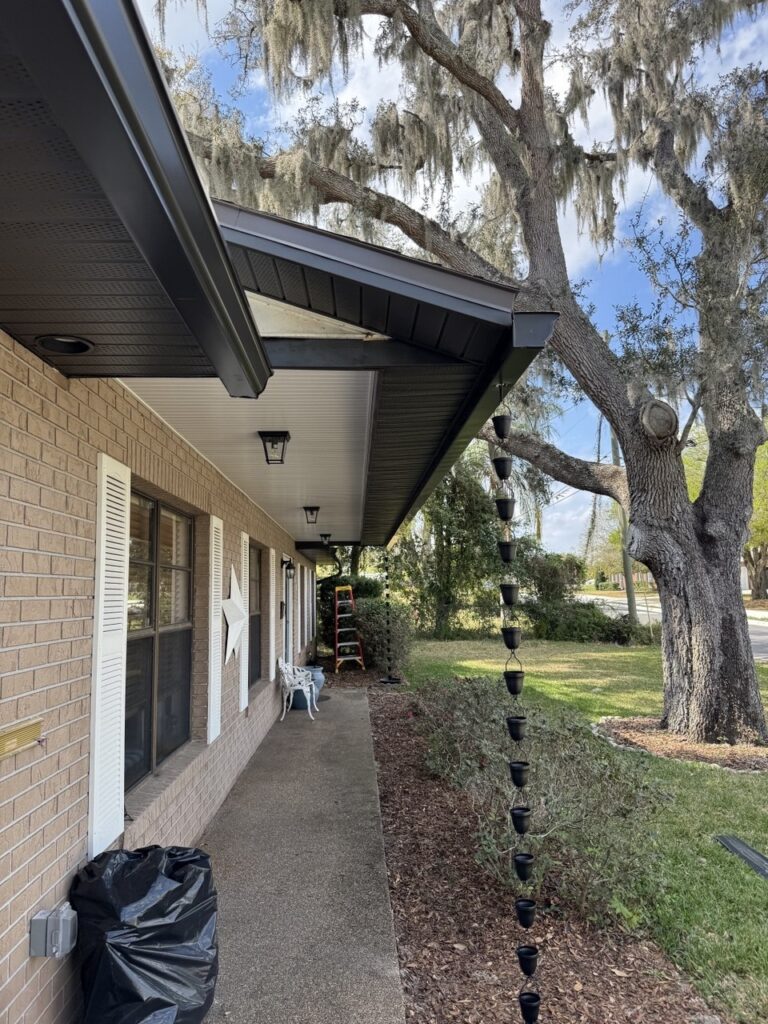
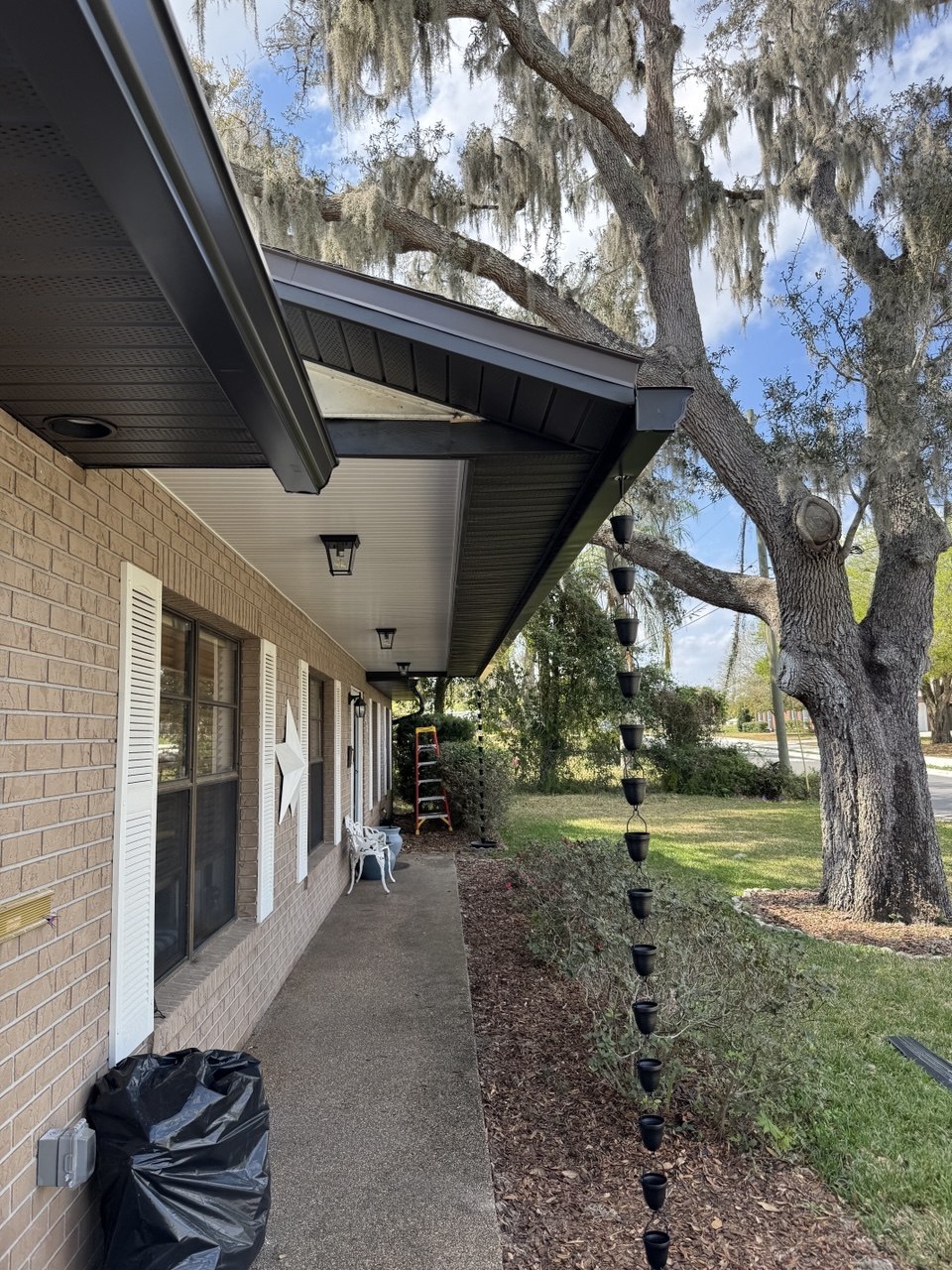
After a Central Florida storm, the safest first inspection happens from the ground. Strong rain and wind can expose an existing drainage problem, move debris, loosen a section, or change where roof runoff reaches the property. The goal is not to diagnose everything yourself; it is to identify changes and collect useful information before requesting service.
Wait until dangerous weather has passed. Keep away from downed lines, standing water near electrical equipment, unstable branches, and visibly loose building materials. For broader post-storm precautions, review the National Weather Service guidance for after a hurricane.
Begin with a wide view of every roof edge
Walk the property only where conditions are safe. Compare each gutter run with how it looked before the storm. Look for sections that appear lower, twisted, separated, or pulled away from the fascia.
Use a wide photo for each side of the house. A close-up may show damage, but the wider view helps explain the roof shape, nearby trees, valleys, corners, and downspout locations that affect runoff.
Check the ground before looking up
Fresh evidence is often easier to see below the roof edge. Note washed-out mulch, new soil channels, splash marks, pieces of sealant or metal, and puddles that were not present before. These clues can help locate overflow or discharge problems.
Do not stand directly beneath a gutter that appears loose. Photograph it from an angle and keep people and pets away until it can be assessed.
Inspect downspouts from outlet to discharge point
From the ground, trace each visible downspout. Look for disconnected elbows, crushed sections, open joints, missing extensions, or outlets blocked by windblown debris.
Then follow the discharge path. Confirm that water is not being directed back toward the foundation, across an entrance, or into a new eroded area. If the downspout enters an underground connection, record any backup or water surfacing near the adapter. The buried line may be a separate drainage scope from the gutter system.
Look for overflow marks and debris concentration
Leaves and small branches can collect at roof valleys, inside corners, and outlets. From the ground, look for visible debris above the gutter or staining down the front face. If buildup is visible but the system is not damaged, review the Central Florida gutter cleaning service. Do not climb onto a wet roof or reach into a gutter from an unsecured ladder.
If another rain occurs after conditions are safe, observe from indoors or under cover. Note whether water goes over the front edge, behind the gutter, through a seam, or around an end cap. The path is more useful than simply reporting that the gutter leaks.
Check soffit and fascia areas for new changes
Examine the vertical fascia behind the gutter and the soffit under the roof overhang. New stains, peeling finishes, loose panels, gaps, or visibly soft-looking areas should be documented.
These signs do not prove that the gutter caused hidden damage. Water can travel from roofing, flashing, a seam, or another component before it becomes visible. Ask the contractor to separate gutter work from roofing, fascia, soffit, or structural repairs in the written scope.
Record roof features above the affected area
A problem near the ground may begin higher up. Photograph roof valleys, upper-roof downspouts, inside corners, and transitions directly above the affected gutter. These features can concentrate runoff during intense rain.
Do not make temporary changes that hide the original pattern before taking photos. If an emergency measure is necessary to protect people or property, document the condition first when it is safe to do so.
Make a short storm inspection record
A concise record helps a contractor understand what changed:
- date and approximate time of the storm;
- which side of the house is affected;
- whether the issue appeared during wind, heavy rain, or afterward;
- wide photos and close-ups taken safely from the ground;
- any video showing the water path;
- changes in downspout discharge, puddling, or erosion;
- recent roof, exterior, or tree work that may be relevant.
Describe only what you observed. Avoid labeling concealed damage or assigning a cause before inspection.
Know when the area needs prompt professional attention
Keep clear of a gutter section that is hanging, sharply bent, or supporting a branch. Also treat active water entry, exposed building materials, and rapidly worsening separation as reasons to request timely assessment. Emergency roofing, electrical, tree, or structural hazards may require a different qualified professional.
For gutter-specific concerns, review the Central Florida gutter repair service. If several runs are damaged or the existing layout repeatedly struggles with runoff, compare repair with a written Central Florida gutter installation proposal.
Questions to ask in the repair proposal
- Which gutter sections, outlets, downspouts, or attachments are affected?
- What evidence supports the proposed repair?
- Are soffit, fascia, roofing, drainage, painting, or tree work excluded?
- How will additional concealed work be documented and approved?
- How will drainage and attachment be checked after completion?
- What cleanup and disposal are included?
Request a Central Florida storm-related gutter assessment
To discuss an Orlando, Oviedo, or nearby Central Florida property, contact Gutters Market LLC through the Florida contact page. Call 407-987-4080 or email guttersmarket@gmail.com. Include the affected side of the home, what changed after the storm, and any safe ground-level photos or video.
Gutters Market LLC · 56 Boardwalk Ave, Oviedo, FL 32765.