
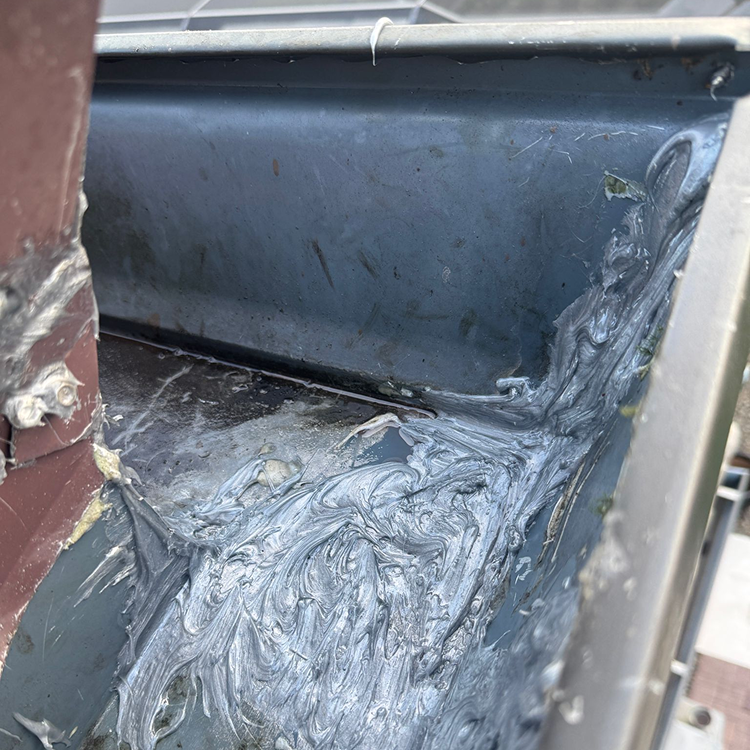
When rainwater runs between a gutter and the roof edge, the visible drip is a symptom rather than a complete diagnosis. On a Central Florida home, the cause may involve the gutter position, roof-edge components, a localized obstruction, or water traveling from a different point than it first appears.
This ground-level checklist will help you document the pattern safely before requesting service. It is especially useful during the frequent, wind-driven rain common to the Orlando and Oviedo area, when water paths can be difficult to interpret after the storm has passed.
Confirm whether the water is behind the gutter
Stand at a safe distance during normal rain and watch the roof edge. Water that passes over the front lip usually suggests a different issue from water appearing between the back of the gutter and the fascia. A leak at an end cap or seam can also travel along the outside of the gutter and look like a roof-edge problem.
Note where the water first becomes visible. Do not rely only on the puddle below; water can move along metal, trim, or siding before it reaches the ground.
Look for a pattern, not just a single drip
Record whether the problem occurs along an entire run or only in one short section. A continuous line of water may point to a different condition than a concentrated stream near a corner, valley, downspout, or roof transition.
- Only during heavier rain: the volume of runoff or an obstruction may be relevant.
- Immediately when rain begins: the roof-edge path or a nearby joint may deserve attention.
- After the gutter fills: debris, pitch, or the outlet may be restricting flow.
- During wind-driven rain: water may be reaching the edge from an angle that is not obvious in calm weather.
A short video taken from the ground can show the sequence more clearly than photos taken after the rain.
Check the nearest outlet and downspout
A gutter can appear to leak behind the back edge when water is not moving efficiently toward the outlet. Once the weather clears, look from the ground for leaves at the outlet, a visibly disconnected elbow, a crushed lower section, or water remaining in part of the gutter.
Do not remove covers or climb onto a wet roof to investigate. If access requires a ladder or the roof edge is high, leave the inspection to a qualified professional.
Notice the roof transitions above the problem
Roof valleys, inside corners, upper-roof downspouts, and short sections receiving runoff from a larger area can concentrate water. Mark whether one of these features is directly above or just uphill from the wet spot.
If an upper downspout empties onto a lower roof, include that in your photos. The gutter contractor needs to understand the full path of the water, not only the final section where it becomes visible.
Do not assume the fascia is the source
Staining or soft-looking trim below a gutter deserves attention, but it does not identify the source by itself. Water may come from the roof edge, a gutter attachment point, a seam, an end cap, or another building component. Existing wood deterioration can also affect how securely a gutter remains positioned.
A useful estimate should distinguish gutter work from roof, fascia, soffit, or structural repairs. Ask the contractor to describe what was observed and which parts of the proposed work are included.
Document these details before requesting repair
Collect a small set of clear, ground-level evidence:
- a wide photo showing the full roof edge and gutter run;
- a closer photo of the first visible drip or stream;
- the nearest corner, seam, outlet, and downspout;
- any roof valley or upper downspout above the area;
- staining, separation, sagging, or erosion below;
- the approximate intensity and direction of the rain.
Include whether the issue started recently, followed roof or exterior work, or has become more frequent. Avoid describing hidden damage as a certainty when it has not been inspected.
Questions to ask in a gutter repair proposal
Before approving work, ask for the diagnosis and scope in writing:
- Where is the water entering or bypassing the gutter?
- Is the outlet or downspout flowing properly?
- Will the work adjust, reseal, repair, or replace the affected section?
- Are roof-edge, fascia, soffit, or buried-drainage repairs excluded?
- How will the repaired area be checked after completion?
For localized concerns, review the Central Florida gutter repair service. If the layout or condition makes replacement a better discussion, the seamless gutter installation page explains the related service.
Request a Central Florida assessment
Related Florida gutter guides: why water pools near a downspout and how to evaluate a leaking gutter joint.
To discuss an Orlando, Oviedo, or nearby Central Florida property, contact Gutters Market LLC through the Florida contact page. Call 407-987-4080 or email guttersmarket@gmail.com. Include the affected roof edge, when the water appears, and any photos or video taken safely from the ground.
Gutters Market LLC · 56 Boardwalk Ave, Oviedo, FL 32765.