
A gutter joint leak in Central Florida often looks simple: one drip below a corner, end cap, outlet, or connection. But the place where water appears is not always the place where the problem begins. Water can travel along the gutter edge, collect in a low spot, or escape near a joint because the outlet is restricted.
The most useful first step is to watch how the system behaves during rain while staying safely on the ground. This checklist helps you separate a localized seam problem from overflow, poor pitch, loose supports, or a downspout issue.
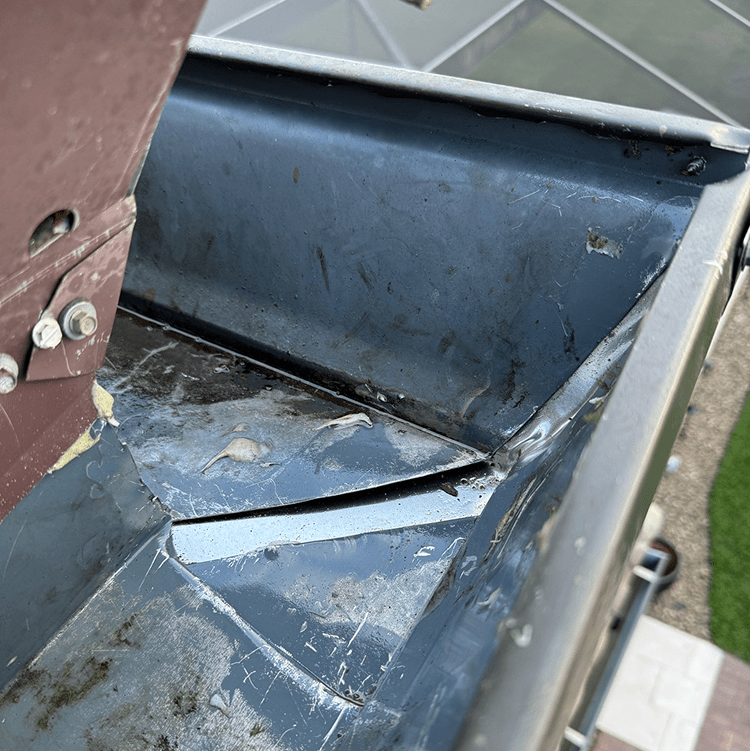
Where gutter joints are still found on a seamless system
“Seamless” describes the long gutter runs, which are formed in continuous sections. A complete system still has connection points at inside and outside corners, end caps, and outlets leading to downspouts. Those are the places to observe when a drip appears.
A visible leak can come from a loose connection, deteriorated sealant, a gap created by movement, or water standing where it should be draining. Before resealing anything, identify which condition is present.
Start by recording exactly when and where it leaks
- Note the location. Is the water coming from a corner, end cap, outlet, or the bottom of a connection between parts?
- Compare light rain with a heavy downpour. A drip in any rain points more directly to the joint. A problem that appears only during intense runoff may be overflow rather than a failed seam.
- Watch the downspout. Water should enter the outlet and discharge normally. Overflow beside an outlet can indicate debris or a restriction farther down the drainage path.
- Look along the gutter line. From the ground, check for a low section, a visible twist, or a gutter pulling away from the fascia.
- Photograph the pattern. A short video during rain and a dry photo afterward can make a repair inspection more efficient.
What different water patterns usually suggest
A steady drip from the underside of a joint
This is the clearest sign that the connection itself needs attention. The area may need to be cleaned, dried, realigned, secured, and sealed with material intended for gutter use. Applying new sealant over dirt, moisture, or loose material can hide the symptom without correcting the connection.
Water running behind the gutter
Water behind the gutter is not automatically a joint leak. It can be related to how runoff leaves the roof edge, the position of the gutter, or a gap near the roof-edge flashing. The source should be traced before the joint is treated.
Overflow beside the outlet or downspout
If water rises inside the gutter and spills near the outlet, inspect the drainage path before blaming the seam. Debris in the outlet, elbow, or downspout can back water up. Our Florida gutter cleaning service addresses the gutter and downspout flow together.
Overflow at a roof valley or corner only in heavy rain
A concentrated stream from a roof valley can overshoot or overwhelm one small area even when the rest of the gutter drains. Pitch, outlet placement, gutter position, and the amount of roof runoff reaching that point all matter. The repair should match the water pattern instead of relying on sealant alone.
Safe checks to make after the rain stops
From the ground, look for a separation line, peeling sealant, staining, loose hardware, or a low section that may retain water. Check the discharge area for unusually weak flow or water backing up near an elbow. Do not climb onto a wet roof or ladder, and keep clear of electrical service equipment.
If you use a hose on a dry day, use a light flow and observe one section at a time. Stop if the test would require unsafe access or could send water toward electrical components, doors, or damaged building materials.
When a targeted repair may be enough
A localized gutter repair may be appropriate when one corner, end cap, outlet, or short connection is leaking and the surrounding gutter remains properly supported and aligned. A useful repair scope should explain the source, preparation, fastening or alignment work, sealing method, and how drainage will be checked afterward.
Broader work may make more sense when several joints leak, the gutter repeatedly holds water, multiple hangers are loose, or the run is bent or pulling away. If the existing layout cannot move runoff reliably, compare repair with a properly planned seamless gutter installation instead of paying for repeated patches.
What a joint repair should specify
A useful estimate should identify the actual connection: a corner, end cap, outlet, or lap joint. It should also state whether the gutter needs cleaning, realignment, or fastening before sealant is applied. A loose corner may continue to move even if a fresh bead initially stops the drip; a backed-up outlet can make a sound joint look like the source of a leak. Ask which finding points to the connection itself and which finding points to the wider drainage path. That distinction helps keep a small seam repair from becoming a repeat visit for an unchanged overflow problem.
Preparation is more than wiping the visible drip. The Geocel 2320/2321 technical sheet calls for a clean, dry surface free of foreign material and removal of existing sealant before resealing. It describes placement along the inside edge of lap joints and around rivets for that product. Henkel’s Loctite gutter repair guide likewise advises clearing debris, letting the seam dry, and removing old caulk before sealing an end cap. These manufacturer resources describe particular products and repair situations; the contractor should check the chosen sealant’s compatible materials, joint size, application conditions, and cure guidance before using it on the existing gutter.
After the repair, ask how the joint and outlet will be checked. A controlled flow check can show whether water is still escaping at the repaired connection and whether it reaches the downspout discharge. It cannot simulate every heavy storm. If the same location overflows only when runoff is concentrated, the roof area, gutter section, pitch, and outlet layout may need a separate capacity review. The written scope should distinguish a sealed joint from a drainage redesign and describe any inaccessible section that was not tested.
Questions to ask before approving the work
- Is the water escaping through the joint, flowing behind the gutter, or overflowing from above?
- Was the outlet and downspout path checked?
- Does the gutter need realignment or additional support before sealing?
- Will the damaged connection be cleaned and prepared before new sealant is applied?
- How will water flow be checked after the repair?
Clear answers help distinguish a complete repair from a cosmetic patch.
Gutter joint inspection and repair in Central Florida
Related Florida gutter guides: why water runs behind gutters and why water pools near a downspout.
Gutters Market inspects leaking joints, corners, outlets, supports, and downspout flow before recommending a repair. To request an estimate, contact Gutters Market or call 407-987-4080.
Browse more Florida gutter advice.